
Delta 8 and delta 9 are two forms of THC that differ by the position of a single chemical bond. Delta 9 is the main THC the cannabis plant makes, while delta 8 occurs naturally only in small amounts. Both are intoxicating, but delta 8 is generally considered less potent: research describes it as binding less strongly to the brain’s CB1 receptor, and one older study put it at about two thirds the potency of delta 9.
Key takeaways
Table of Contents
- The only structural difference is where one double bond sits: between carbons 8 and 9 in delta 8, and between carbons 9 and 10 in delta 9.
- Delta 9 is the dominant THC in cannabis. Delta 8 is found naturally in much smaller amounts.
- Delta 8 is generally considered less potent. A small 1973 study found it about two thirds as potent as delta 9.
- According to the FDA, concentrated delta 8 is typically manufactured from hemp-derived CBD, because the plant doesn’t make much of it.
- A 10 mg delta 8 gummy and a 10 mg delta 9 gummy are not equivalent doses, so compare labels with that in mind.
- Whichever you choose, ask for the certificate of analysis for the batch.
What is delta 9 THC?
When people just say “THC”, they almost always mean delta 9 tetrahydrocannabinol. It’s the main intoxicating compound in cannabis and the one most research has focused on for decades.
The plant doesn’t actually make delta 9 directly. It produces THCA, an acidic precursor, and that converts to delta 9 when it’s heated by smoking, vaping or baking. If you’ve read our explainer on the difference between THCA and THC, this is the same process.
In hemp products, delta 9 shows up most often in edibles such as gummies, chocolates and drinks, where it’s measured in milligrams per serving.
What is delta 8 THC?
Delta 8 tetrahydrocannabinol is a close chemical cousin of delta 9. The Journal of Cannabis Research describes it as differing from delta 9 “in the location of a double bond between carbon atoms 8 and 9 rather than carbon atoms 9 and 10.” That’s the whole difference on paper, and it’s where the names come from.
The catch is supply. According to the FDA, delta 8 “is not found in significant amounts in the cannabis plant,” and concentrated amounts are “typically manufactured from hemp-derived cannabidiol (CBD).” In other words, most delta 8 on the market started life as CBD and was converted in a lab.
That doesn’t make it bad by default, but it does make the quality of the manufacturer matter a great deal, which is covered further down.
Delta 8 vs delta 9: side by side
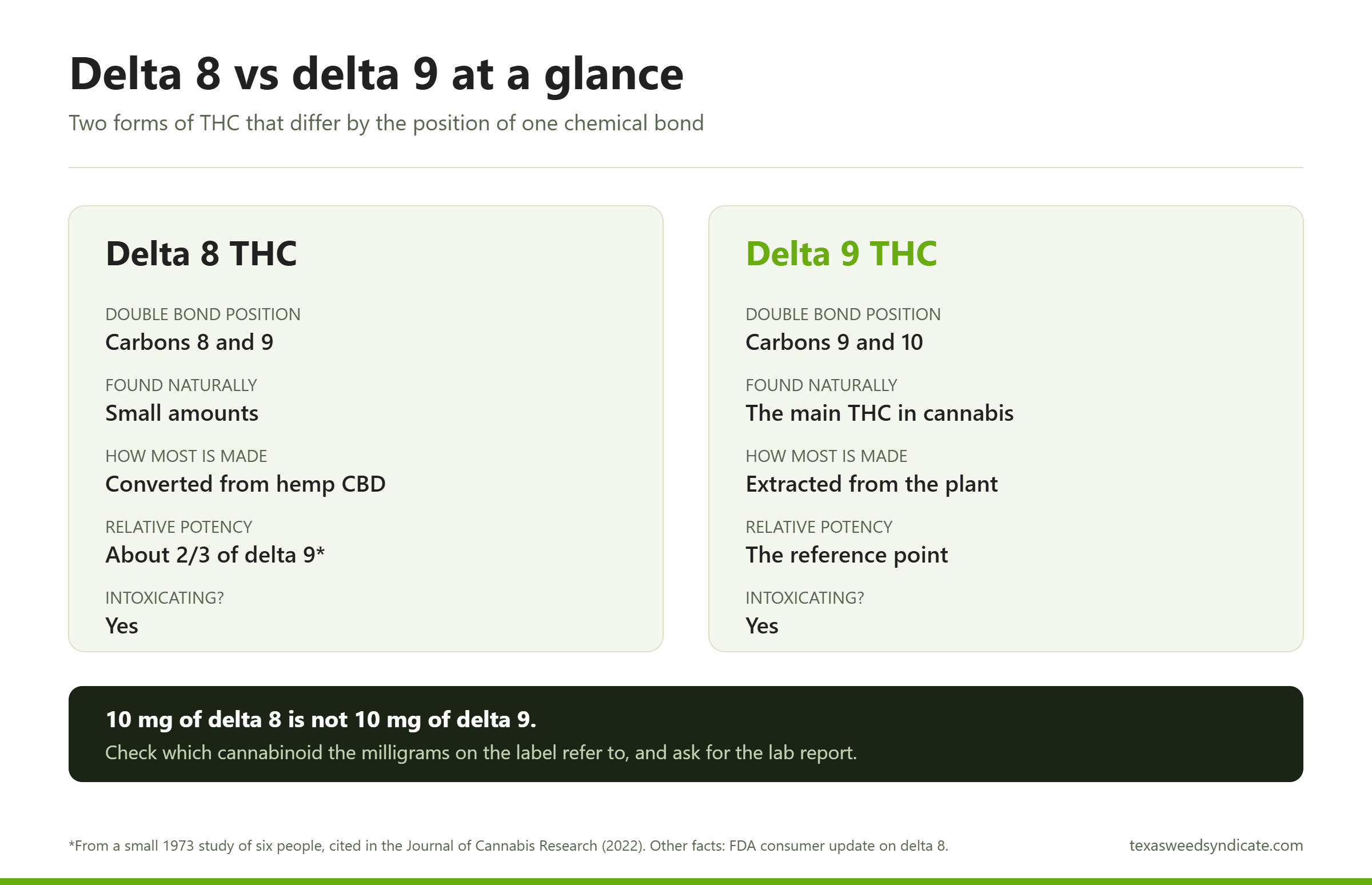
| Delta 8 THC | Delta 9 THC | |
|---|---|---|
| Where the double bond sits | Between carbons 8 and 9 | Between carbons 9 and 10 |
| Natural abundance | Small amounts | The dominant THC in cannabis |
| How most products are made | Converted from hemp-derived CBD | Extracted from the plant |
| Relative potency | Generally lower | The reference point |
| Intoxicating? | Yes | Yes |
| Common product types | Gummies, vapes, tinctures | Gummies, drinks, chocolates, syrups |
| Stability | Described in research as more stable | Can oxidize to CBN over time |
Which is stronger, delta 8 or delta 9?
Delta 9 is stronger, milligram for milligram.
The reason is how each one interacts with the body. The Journal of Cannabis Research review explains that delta 8 “has a lower affinity for the CB1 receptor and therefore has a lower psychotropic potency than delta-9-THC.” The figure you’ll see quoted most often comes from a small study from 1973, which found delta 8 to be “about two-thirds as potent” as delta 9.
Two cautions on that number. It comes from a study of six people more than fifty years ago, so treat it as a rough guide rather than a conversion rate. And individual response to any form of THC varies a lot, so your own experience may not match the average.
What it does tell you is practical: you can’t swap one for the other at the same milligram amount and expect the same result.
Delta 8 vs delta 9 gummies: reading the label
Gummies are where most people meet both compounds, and the label is where they’re easiest to confuse.
- Check the cannabinoid, not just the number. “10 mg” means very different things for delta 8 and delta 9. Make sure you know which one the milligrams refer to.
- Check per piece and per package. Labels often list both. Per piece is what you’ll actually take.
- Look for blends. Some products combine delta 8 and delta 9, or add CBD. The label should break those out separately.
- Find the certificate of analysis. A third-party lab report should confirm what’s in the batch and in what amount.
If you’re new to edibles in general, timing matters as much as dose. Our guide to taking edibles for the first time covers how long they take and why starting low makes sense.
Why the manufacturing process matters more for delta 8
Because so much delta 8 is converted from CBD, the chemistry between the field and the gummy is doing a lot of work. The FDA’s consumer update warns that some manufacturers “may use potentially unsafe household chemicals” in that conversion, and that additional chemicals may be used to change the color of the final product.
The same FDA page notes that delta 8 products “have not been evaluated or approved by the FDA for safe use in any context.” It also reports that the agency received 104 adverse event reports involving delta 8 products between December 2020 and February 2022, with 66% involving food products such as gummies.
None of that means every delta 8 product is risky. It does mean the certificate of analysis is doing more for you with delta 8 than with almost anything else in the hemp aisle. A good one shows the full cannabinoid profile, not just the headline number, and ideally screens for residual solvents. Our walkthrough of how to read a certificate of analysis explains what each section means.
How delta 8 and delta 9 compare with delta 10
Delta 10 is another THC isomer you’ll see on shelves. If you’re comparing all three, we’ve covered delta 8 vs delta 10 separately.
Choosing between them
There’s no single right answer, and anyone telling you one is “better” is usually selling something. What actually separates them for most people comes down to a few questions.
- How strong do you want it? Delta 9 is the more potent of the two at the same milligram amount.
- What product do you want? Drinks and syrups are more often made with delta 9, while delta 8 turns up a lot in vapes and gummies.
- How much do you trust the maker? With delta 8 especially, a full certificate of analysis from an independent lab is non-negotiable.
- What’s allowed where you live? Rules on hemp-derived THC vary from state to state, so check local rules before buying.
Whichever you pick, these are products for adults 21 and over.
Frequently asked questions
What is the difference between delta 8 and delta 9?
Delta 8 and delta 9 are both forms of THC that differ only in the position of one double bond in the molecule. Delta 9 is the main THC the cannabis plant produces, while delta 8 occurs naturally in small amounts and is usually made from hemp-derived CBD. Delta 9 is generally the more potent of the two.
Is delta 8 or delta 9 stronger?
Delta 9 is stronger at the same milligram amount. Research describes delta 8 as binding less strongly to the CB1 receptor, and a small 1973 study found it about two thirds as potent as delta 9. Individual responses vary, so treat that figure as a rough guide.
Is a 10 mg delta 8 gummy the same as a 10 mg delta 9 gummy?
No. Because delta 8 is generally less potent, 10 mg of delta 8 is not equivalent to 10 mg of delta 9. Always check which cannabinoid the milligrams on the label refer to, and whether the product blends more than one.
How is delta 8 made?
According to the FDA, delta 8 isn’t found in significant amounts in the cannabis plant, so concentrated delta 8 is typically manufactured from hemp-derived CBD. That conversion is why choosing a reputable maker and checking a third-party certificate of analysis matters so much.
Are delta 8 and delta 9 both intoxicating?
Yes. The FDA states that delta 8 has psychoactive and intoxicating effects similar to delta 9. Both are intended for adults 21 and over.


